
Belonging Without Ownership
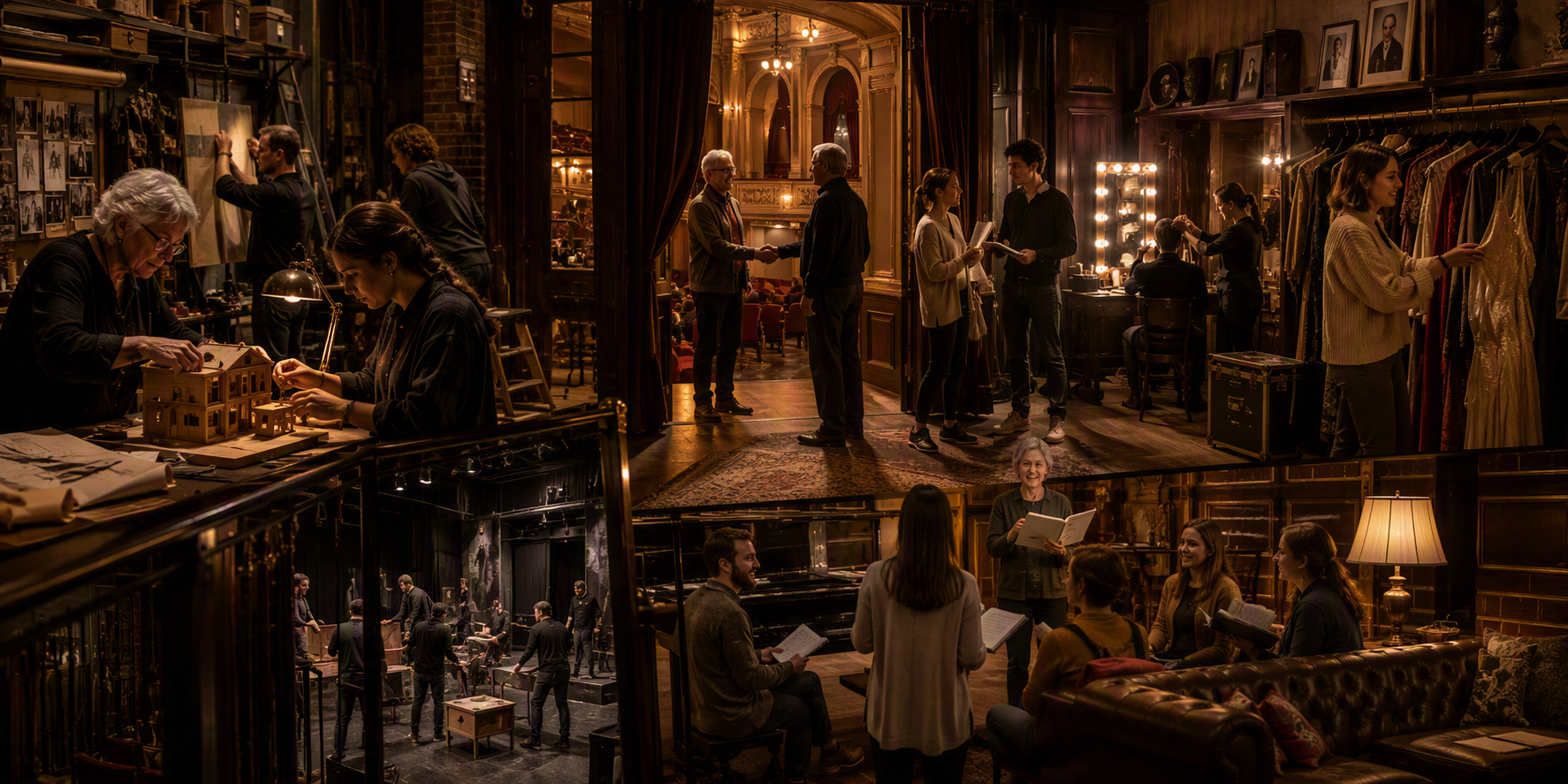
I’ve spent a good part of my life around theater and performance spaces, and anyone who’s ever done that kind of work knows how quickly a place can become part of you. You arrive for an audition or a first rehearsal as someone who’s simply hoping to participate. You may not know the building very well, and you probably don’t know everyone in the room. Then rehearsals begin, evenings accumulate, and the rhythms of the place gradually become familiar.
After a while, you know which entrance will still be open when rehearsal runs late. You know where people gather before a performance and which corner becomes quiet when someone needs a moment to concentrate. You know who’ll notice if a prop has been moved, who can solve a problem with the sound system, and who always seems to have exactly what someone else forgot to bring.
None of us owns the theater. We don’t hold the deed, control the budget, or make every decision about the building. Yet if someone walks into that space and treats it carelessly, we notice. If a new person looks uncertain, someone helps. If something needs to be put away, repaired, carried, cleaned, or returned to its proper place, people step forward because the environment matters to them.
That’s when I began to understand that ownership and belonging aren’t the same thing.
The Places We Choose to Return To
A home offers an obvious relationship. We live there, shape it, care for it, and surround ourselves with the people and things that matter to us. Our connection to it is reinforced every day by ownership, responsibility, privacy, and ordinary household life.
Shared environments create a different kind of relationship. Nobody has to return to the theater, the club, the community center, the volunteer organization, the fitness community, or the neighborhood gathering place. People choose to return. They choose to participate, contribute, and build relationships there, often over many years.
That choice changes the place.
Someone arrives for the first time as a guest and watches how other people behave. On the next visit, a few faces look familiar. Eventually, someone remembers their name. A conversation becomes a friendship, an occasional visit becomes part of the weekly rhythm, and the person who once needed help finding their way begins helping someone else feel comfortable.
There’s rarely a single moment when participation becomes belonging. It happens quietly. The person starts saying “we” instead of “they.” They begin talking about the place as though they have some responsibility for its future, even though they still don’t own any part of it.
More Than Access
Technology can make access relatively easy. A credential can open a door. A membership record can permit a reservation. A system can determine whether someone may use the fitness center, attend an event, reserve a room, play a round of golf, or participate in a riding lesson.
Those capabilities matter, but access alone doesn’t create belonging.
A person may initially join because of an amenity, a program, or a service. The golf course may be beautiful, the fitness facilities may be exceptional, or the organization may offer opportunities that are difficult to find elsewhere. Yet people rarely remain deeply connected to a community for years because a door continued to unlock correctly.
They stay because people know them. They stay because their presence becomes part of the life of the place. They stay because they’ve shared meals, joined conversations, participated in events, learned something, taught something, helped someone, or been helped themselves.
The experience stops feeling like a transaction. The person is no longer only consuming what the environment offers. They’re contributing to what the environment becomes.
That’s the difference between a visitor and a participant.
When Participation Becomes Identity
As I think about Identity within Spaces That Behave Well, community and membership environments reveal something that other settings don’t always make as visible. Identity isn’t simply a name, photograph, credential, or membership number. It also reflects the relationship someone develops with the place and with the people who share it.
The same person may be a guest at one event, a member at another, and a volunteer when the community needs help. Over time, that person may become a mentor, organizer, instructor, committee member, or trusted caretaker of something the community values. The person hasn’t changed in the way an identification system might normally describe them, but their relationship to the environment has changed considerably.
A space that behaves well needs to recognize that distinction without turning community life into an administrative process. It should understand enough to support participation, protect appropriate boundaries, and help people fulfill their responsibilities. It shouldn’t treat every relationship as nothing more than a permission attached to an account.
The technology may know that someone has access to a room. The community knows why the person is there.
That difference matters.
Caring for Something That Isn’t Yours
Community environments also make Stewardship visible in an unusually human way. Some of the people who care most deeply for a place hold no ownership interest in it at all. They care because the place has become meaningful.
You see it in the member who welcomes newcomers without being asked, the volunteer who arrives early to prepare the room, the participant who notices that something isn’t quite right, and the longtime member who understands the history behind a tradition everyone else simply enjoys. None of these people needs to own the environment to feel responsible for its well-being.
That kind of stewardship can’t be assigned entirely through policy. An organization can define responsibilities, establish roles, and create procedures, but people choose whether to bring care to those responsibilities. The strongest communities make that choice feel natural because participants understand that their actions affect something larger than themselves.
This raises an important question for intelligent environments. If technology makes participation easier, does it also help people become better stewards, or does it quietly turn them into passive consumers of services?
A system that schedules a room, manages a reservation, or coordinates access may work perfectly while doing very little to strengthen the community. The technology fulfills the transaction, but the environment misses the relationship.
What a Space Should Remember
Belonging also changes the conversation about Continuity. A community benefits from remembering that people have history with the place. Recurring activities, established preferences, familiar relationships, and prior contributions can help participation feel natural rather than forcing people to begin again every time they arrive.
But a space shouldn’t remember everything simply because it can.
The useful question isn’t whether the environment can build a more complete record of every interaction. The useful question is whether the remembered context helps someone participate, contribute, and remain connected. A recurring reservation may be valuable. A familiar accessibility accommodation may preserve dignity. Knowing that someone regularly volunteers for a particular activity may help Stewardship reach the right person.
Other information may have no continuing purpose at all.
A community that behaves well remembers with intention. It preserves the context that strengthens relationships and allows temporary information to disappear when its purpose has ended. It doesn’t confuse surveillance with care or assume that a complete history automatically creates a better experience.
People want to be known for the ways they participate. They don’t necessarily want to be recorded merely because they were present.
Let the Community Lead the Technology
The more I think about these environments, the less interested I become in technology that simply makes membership more efficient. Efficiency is useful, but it isn’t the human outcome we’re really trying to create.
The better question is whether technology helps people enter the life of the community. Does it make expectations clearer for someone new? Does it help participants discover meaningful ways to contribute? Can it connect a person with the right activity, caretaker, or shared resource without creating pressure? Does it help the community preserve what matters while allowing relationships to evolve naturally?
Technology has a role in all of this, but it shouldn’t become the source of belonging. Belonging still grows through people showing up for one another, sharing experiences, accepting responsibility, and choosing to care for a place they don’t own.
The environment can support those choices. It can reduce unnecessary friction, preserve meaningful continuity, make responsibilities discoverable, and help newcomers become participants. What it can’t do is manufacture the relationship.
Belonging has to be lived.
The Place Becomes Part of the Person
When I think back on the theaters, organizations, professional communities, and gathering places that have mattered in my own life, I don’t remember them primarily because of the buildings. I remember the people I met there, the work we did together, the things we learned, and the moments when a group of individuals began to feel like a community.
The place gave those relationships somewhere to grow.
Over time, the relationship became reciprocal. The community shaped the people within it, and those people shaped the community in return. They didn’t need to own the place for the place to become part of who they were.
That may be one of the most important patterns shared environments can teach us.
A space doesn’t create belonging by granting access. It creates the conditions in which people can participate, contribute, form relationships, and gradually assume stewardship for something they value together.
Some of the most successful spaces create belonging among people who don’t own the environment.
Ownership can establish rights, but participation creates relationships. When people choose to return, contribute, and care, the space becomes more than somewhere they’re allowed to be. It becomes part of the community they help sustain.