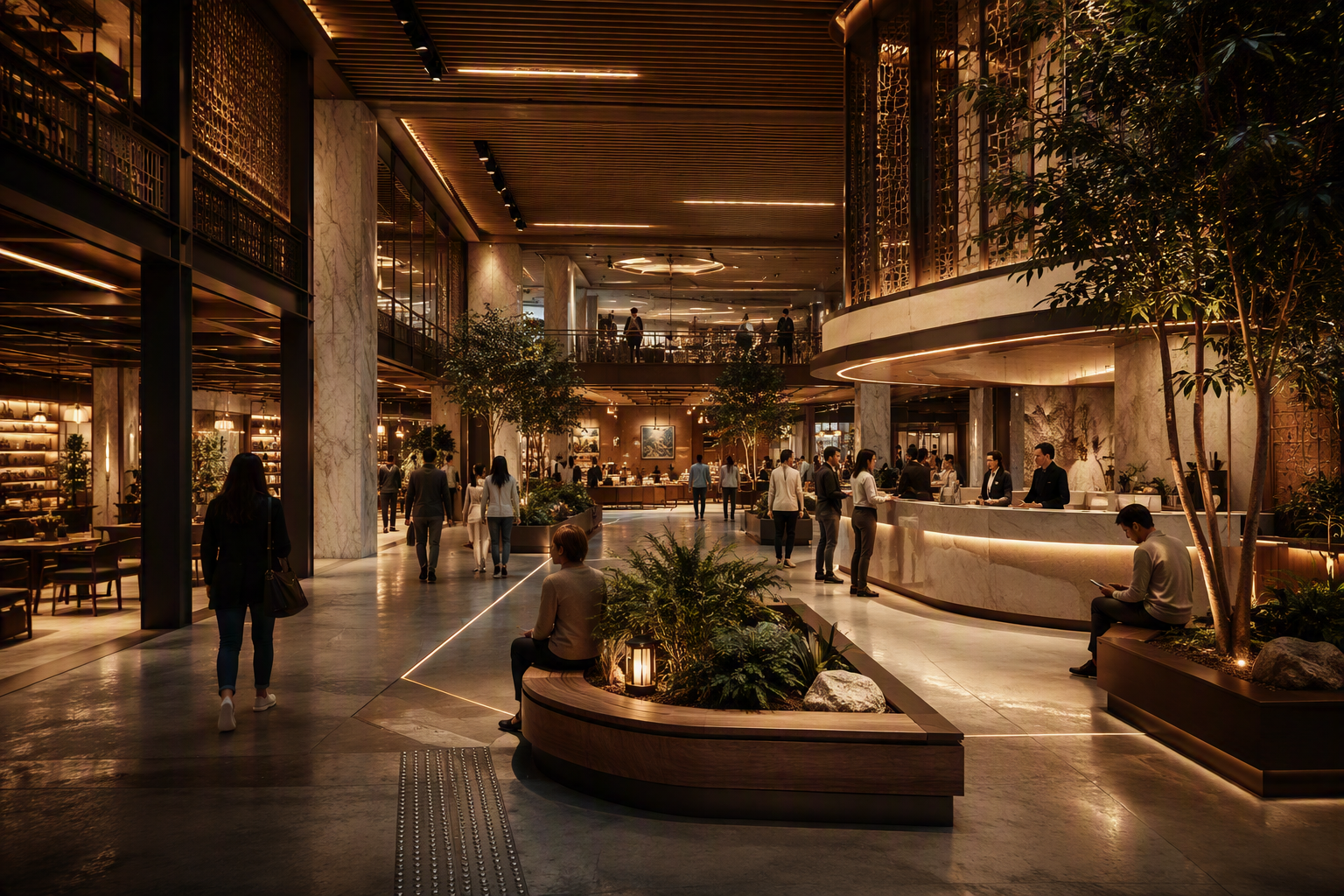
A thoughtfully designed retail environment — the retail context for the BehavesWell Framework

Contexts — Retail

Retail

Shops, markets, and commercial environments that serve browsers and buyers — balancing discovery, decision-making, and the social dimensions of shopping.

The Retail Context

Where Browsing Becomes Belonging

Retail environments carry a unique behavioral burden: they must simultaneously invite exploration and guide decision-making, serve the committed buyer and the casual browser, and create conditions where strangers feel comfortable enough to linger, consider, and return.

The BehavesWell Framework examines retail as a context where spatial behavior directly influences commercial outcomes — but more fundamentally, where the quality of the environment shapes whether people feel welcomed or processed.

Framework Application

How the Framework Applies

Discovery Architecture

Retail spaces that behave well create conditions for serendipitous discovery without manufactured urgency. The layout invites exploration rather than directing traffic through a predetermined path.

Decision Support

At the moment of choice, the environment should reduce friction — through lighting, product presentation, and spatial cues that support considered decisions rather than impulsive ones.

Social Comfort

Shopping is often a social act. Spaces must accommodate pairs and groups, allow for conversation and deliberation, and not make people feel surveilled or pressured.

Exit Dignity

Whether a visitor buys or not, the exit experience matters. Spaces that behave well ensure that leaving without purchasing feels as natural and dignified as leaving with a bag.

Contextual Learning Journey

Learn Through Retail

Retail environments must support discovery, decisions, service, accessibility, social comfort, privacy, and dignified departure without turning every visitor into a transaction. This 11-episode journey explores the art of the possible when technology is designed from the beginning to support people rather than process them.

Framework Focus — Human Trust

How Can a Retail Environment Help Without Manipulating?

Visitors may arrive ready to purchase, casually browse, compare options, accompany someone else, ask for help, or leave without buying anything. This episode asks how a retail environment can earn Human Trust by supporting discovery and choice without pressure, surveillance, or manipulation.

Framework Focus — Coordination

What Is Required to Make a Retail Environment Behave Well?

Retail experiences emerge from inventory, pricing, merchandising, memberships, payments, customer service, wayfinding, facilities, accessibility, and staff workflows. This episode explores the integration, coordination, and orchestration required to make those capabilities behave as one understandable environment.

Framework Focus — Truth

How Does a Retail Environment Know What Is True?

Is the item available? Is the displayed price authoritative? Is the promotion active? Is a service actually offered at this location? This episode explores how Retail Truth prevents the environment from creating false expectations or forcing visitors to discover contradictions through failure.

Framework Focus — Identity

How Does a Retail Environment Know Who Is Engaging?

A person may be an anonymous visitor, recognized member, employee, service provider, pickup customer, companion, or accessibility-support person. This episode explores how Retail Identity can support relevant service without assuming that recognition authorizes tracking, personalization, or intervention.

Framework Focus — Operational Trust

How Does a Retail Environment Know What Is Allowed?

Identity alone does not determine whether the environment may personalize an offer, disclose purchase history, apply a membership benefit, open a restricted area, or share information aloud. This episode explores permission, consent, policy, context, and appropriate delivery in retail environments.

Framework Focus — Stewardship

Who Is Responsible for the Retail Experience?

Inventory, pricing, accessibility, facilities, customer service, loss prevention, digital experiences, and tenant responsibilities may belong to different caretakers. This episode explores how retail obligations remain accountable across people, systems, vendors, and operators.

Framework Focus — Continuity

What Should a Retail Environment Remember?

Should preferences, memberships, accessibility needs, shopping lists, and service history continue across visits? What should disappear when a visitor leaves? This episode explores continuity that reduces friction without converting convenience into unnecessary tracking or permanent observation.

Framework Focus — Concierge

What Should the Retail Environment Do Next?

A retail environment may help someone find an item, compare choices, navigate the space, request assistance, or complete a pickup. This episode explores how Concierge can support decisions without steering, pressuring, or taking agency away from the visitor.

Framework Focus — Explainability and Auditability

Why Did the Retail Environment Do That?

Why was an offer shown? Why was access restricted? Why did a price differ? Why was assistance triggered? This episode explores how retail decisions and interventions remain explainable to visitors, staff, operators, and authorized reviewers.

Framework Focus — Governance

How Does Retail Change Without Losing the Visitor's Trust?

Retail environments change through promotions, seasonal layouts, new services, changing tenants, updated policies, technology replacements, and evolving customer expectations. This episode explores how governance protects clarity, dignity, privacy, and accountability while allowing the environment to evolve.

Framework Focus — Technical Debt

Can a Retail Environment Accumulate Technical Debt?

Legacy loyalty platforms, overlapping customer records, inconsistent prices, disconnected inventory systems, abandoned automations, and undocumented exceptions create friction that visitors experience directly. This episode examines how technical debt undermines discovery, trust, and service over time.

Episodes will be linked here as they are produced. Subscribe to the Research Journal to be notified when new content is available.

Research Status

Detailed case studies, pattern libraries, and evidence reviews for the Retail context are in active development. Subscribe to the Research Journal to be notified when new findings are published.

Research Journal