

A Contextual BehavesWell Program
Spaces That Behave Well
Exploring how intelligent environments should behave when the people using them may be temporary, unfamiliar, diverse, or constantly changing.
The Question
How should an intelligent space behave when it does not already know the people using it?
Homes often develop continuity through repeated relationships. Shared environments face a different challenge. The people entering may be guests, customers, residents, visitors, patients, members, employees, or caregivers. Their expectations, permissions, preferences, and familiarity may differ.
Spaces That Behave Well explores how intelligent environments can provide appropriate assistance without assuming identity, familiarity, consent, or authority.
Explore the Research Questions →Why Shared Spaces Are Different
Temporary Relationships
People may interact with the environment for minutes, hours, days, or months. The environment should not require a long history before it can behave appropriately.
Uncertain Identity
The environment may not know who is present, what authority each person holds, or what information may be safely disclosed.
Shared Experience
A single action or communication may affect many people with different expectations, permissions, and needs.
Bounded Service
Helpful behavior must remain within clear limits. Assistance should reduce friction without becoming intrusive, presumptive, or inappropriate.
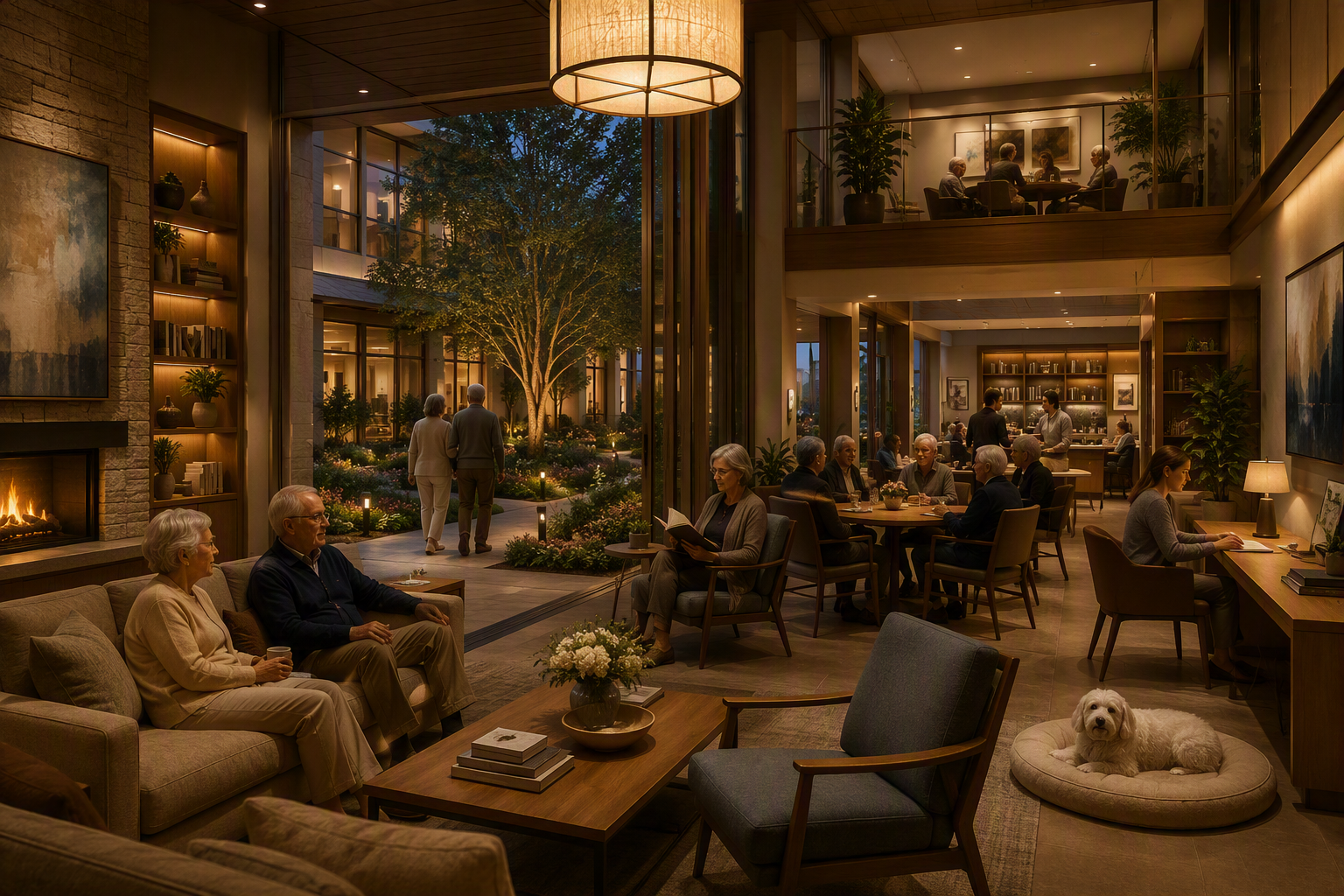
Shared and Transient Environments
Different spaces. A common governance challenge.




Research Focus
Questions that become visible when occupancy is shared or temporary
Explainability
How can an unfamiliar occupant understand what the environment observed, decided, and did?
Identity
How should the environment behave when identity is temporary, uncertain, incomplete, or deliberately undisclosed?
Notice and Disclosure
How should information be communicated when unintended listeners may be present?
Consent and Preference
When may an environment apply a temporary preference, and when must it ask?
Stewardship
Who remains accountable for the environment when the people receiving service are not its caretakers?
Concierge Boundaries
How can a space provide useful assistance without claiming authority or familiarity it has not earned?
Framework and Contextual Research Programs
The BehavesWell Framework provides the governance model, responsibilities, vocabulary, evidence process, and patterns for intelligent environments. Homes That Behave Well, Buildings That Behave Well, and Spaces That Behave Well apply the framework within specific contexts and may contribute observations that inform future framework refinement through the published evidence process.
Governed by a Shared Framework
The context changes. The responsibilities remain.
Spaces That Behave Well applies the BehavesWell Framework to shared and transient environments. The six responsibilities remain Truth, Identity, Operational Trust, Stewardship, Continuity, and Concierge.
The circumstances in which those responsibilities must be fulfilled, however, may differ significantly from a home or managed commercial building.
View the BehavesWell Framework ↗Research Journal
Questions from shared intelligent environments
The Research Journal will document questions, observations, and evolving reasoning as this program develops. The following represent topics under active consideration.
Research Topic
Earning Trust Without Prior Familiarity
How should an intelligent environment establish appropriate trust with an occupant it has never encountered before?
Research Topic
Identity in Transient Occupancy
Examining the limits of identity inference when occupancy is temporary and relationships are brief.
Research Topic
Notice Architecture for Unfamiliar Occupants
Designing disclosure patterns that function across diverse and unfamiliar occupant populations.